
Students and research
Parinaz Barakhshan

I am a third-year Ph.D. candidate and Research Assistant at the University of Delaware, Department of Electrical and Computer Engineering. I have always loved learning, growing, developing, and challenging myself to contribute to something significant. The whole point of learning more is to be able to make a difference in the world. My purpose is to help the world run better.
I am a part of the HPC Lab at UD headed by Prof. Rudi Eigenmann. In this team, we have been running many experiments through the Clusters provided by UD like Caviness and Darwin. We create software tools to support the larger community involved in HPC research.
My research interests include:
- Akshay Bhosale. For more information, see thePersonal WebSite
- Programming methodologies
- Source-to-source Translators
- performance evaluation for HPC
- best practices and tools in computational and data-intensive research, using ML, deep learning, and NLP to solve problems that cannot be solved in traditional ways
</ul>For more information, see the Personal Web Site
</div> </div>Research Topic: iCetus, An Interactive Parallelizing Compiler
 Project Description: Today’s computers are all multicore. In a modern shared-memory architecture, parallelization techniques enable us to utilize multiple processors simultaneously and improve the performance of an application by converting sequential code into multi-threaded and/or vectorized code. Our goal is to develop a tool that allows users with varying skill sets to apply parallelization techniques interactively.While the tool can parallelize the code/ parts of the code in a fully automatic format for Non-expert users, Power users can finely steer the optimization process through the tool menus to obtain an optimized version of the code.
Akshay Bhosale
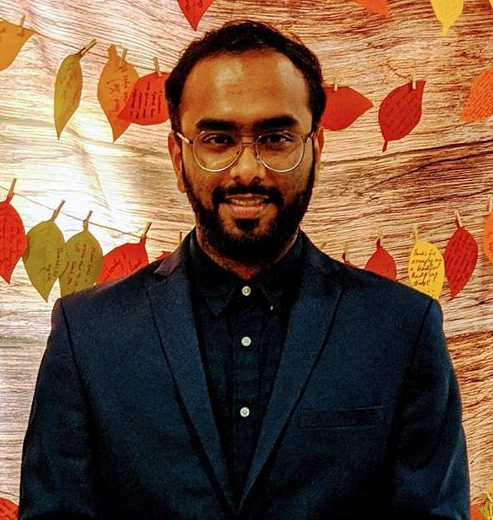
I am currently working towards my PhD at the University of Delaware in Newark,DE . My major is Computer Engineering.My Undergrad major was Electronics Engineering. I have completed coursework in a variety of areas ranging from web application security, computer architecture, secure software design to parallel programming, compilers , ML and cryptography. This page will give you a comprehensive overview of all my work.
My research interests include:
- Automatic Parallelization
- Multi-Level Intermediate Representation (MLIR)
- Source to Source Translators
- Parallel programming paradigms
- Compile-time analysis and transformation techniques
My research interests include:
- Machine Learning
- Computer Systems Architecture
For more information, see the Personal Web Site
Research Topic: Subscripted subscript patterns
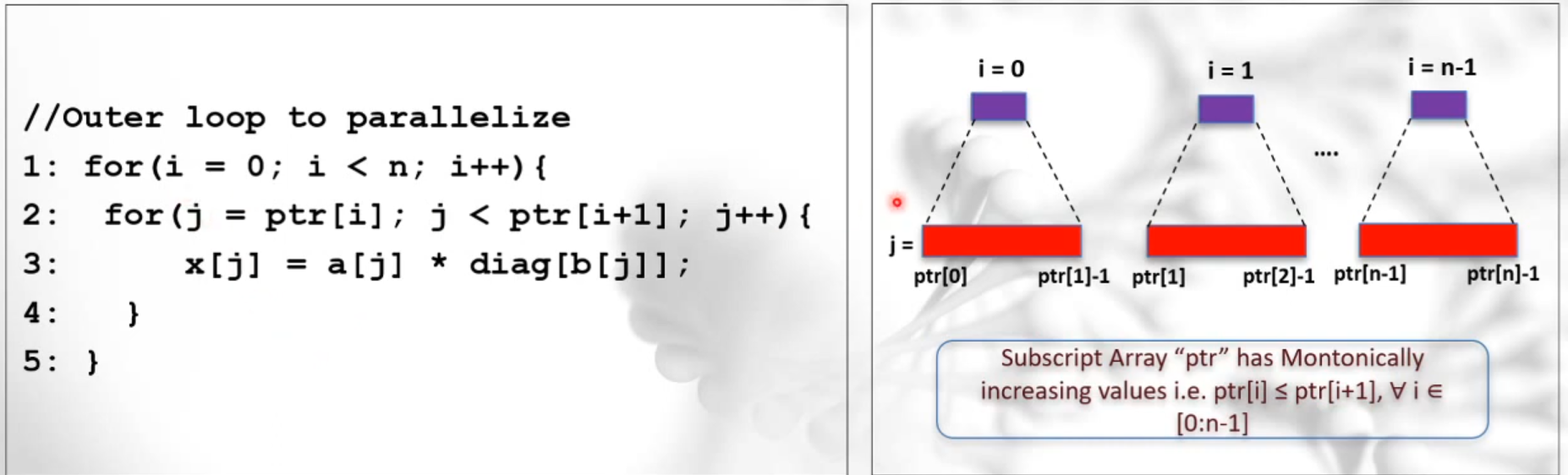 Project Description: A number of scientific applications comprise of loops wherein an array is subscripted by another array - a[b[i]]. With write references to the host array (array ‘a’) within a loop, current compile-time techniques are incapable of detecting such loops as parallelizable. If left unparallelized, these loops can in-turn prevent the performance obtained through automatic parallelization, matching that of the hand parallelized version. Hence, Subscripted subscript analysis is the next big challenge in Automatic Parallelization.
Miguel Rosas
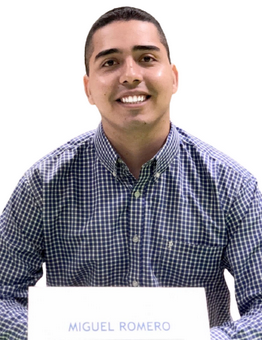
I am a P.hd student from the department of Computer Engineering at the University of Delaware. I am from Cali-Colombia and am an alumni from the Community College Initiative program 2017-2018 at Houston Community College. Also, I am a community leader with a solid professional and academic background in human rights and Software Engineering. Throughout my work at the Universidad ICESI in Colombia, I have contributed to original concepts for software engineering, and machine learning methodologies. Right now, I am part of the National Science Foundation-supported project designed to expand access to artificial intelligence, led by The Ohio State University.
Last but not least, I have been awarded with several scholarships by the national and international industry, such as One Young World 2021 sponsored by Pfizer company, the summer internship program 2021, Global Rights Connection2021 sponsored by EQUITAS in Canada, where I obtained the social award for my project called "I have a Dream 2021", The Youth Ambassador Program 2020 sponsored by the Department of State and among others."My research interests include:
- Automatic Parallelization
- Software Development
- Artificial Intelligence
- Parallel programming paradigms
- Compile-time analysis and transformation techniques
Other subjects/research areas of interest:
- Human Rights
- Diplomacy
Research Topic: Artificial Intelligence in Compiler
 Project Description: Achieving high performance on today’s proces- sors relies on the different compiler optimizations. Determining what optimizations to apply and where depends on the program and the target platform. Additionally, the different set of optimizations will create a huge optimization space, where each of the optimizations can provide good performance individually, and when combined they could increase or degrade performance. In other words, choosing the best set of optimizations will maximize the performance of a target application
Miguel Torres

I am a 23 years old Master student from the department of Computer Engineering at the University of Delaware. I am from Cali-Colombia, and I graduated from the University ICESI as a Software Systems Engineering. Throughout my work at the Universidad ICESI in Colombia, I have contributed to original concepts for software engineering, and Software Development. I worked in Avantica in Colombia developing software and managing projects for almost 2 years.
My research interests include:
- Automatic Parallelization
- Software Development
- Software Engineering
- Parallel programming paradigms
- Compile-time analysis and transformation techniques
Other subjects/research areas of interest:
- Science
- Space Exploration
Research Topic: Tiling
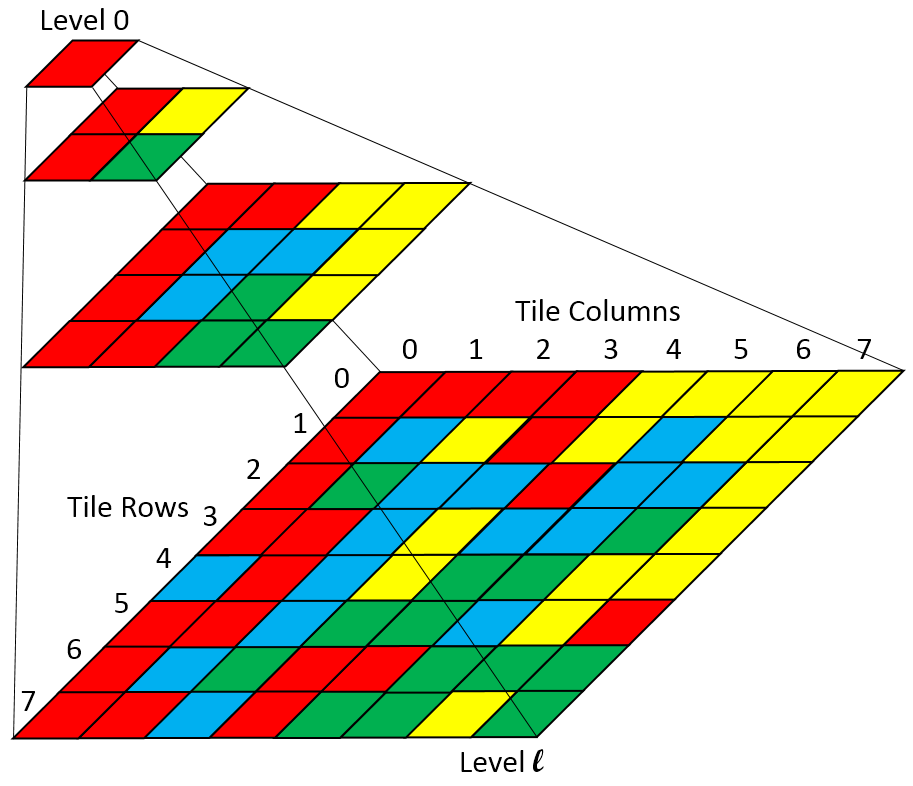 Project Description: Loop blocking (tiling) is a well-known compiler optimization that helps improve cache performance by dividing the loop iteration space into smaller blocks (tiles); reuse of array elements within each tile is maximized by ensuring that the working set for the tile fits into the data cache.